Nvidia AI Chip Sales to China Face New U.S. Export Restrictions
07/01/2026 / By Chase Codewell
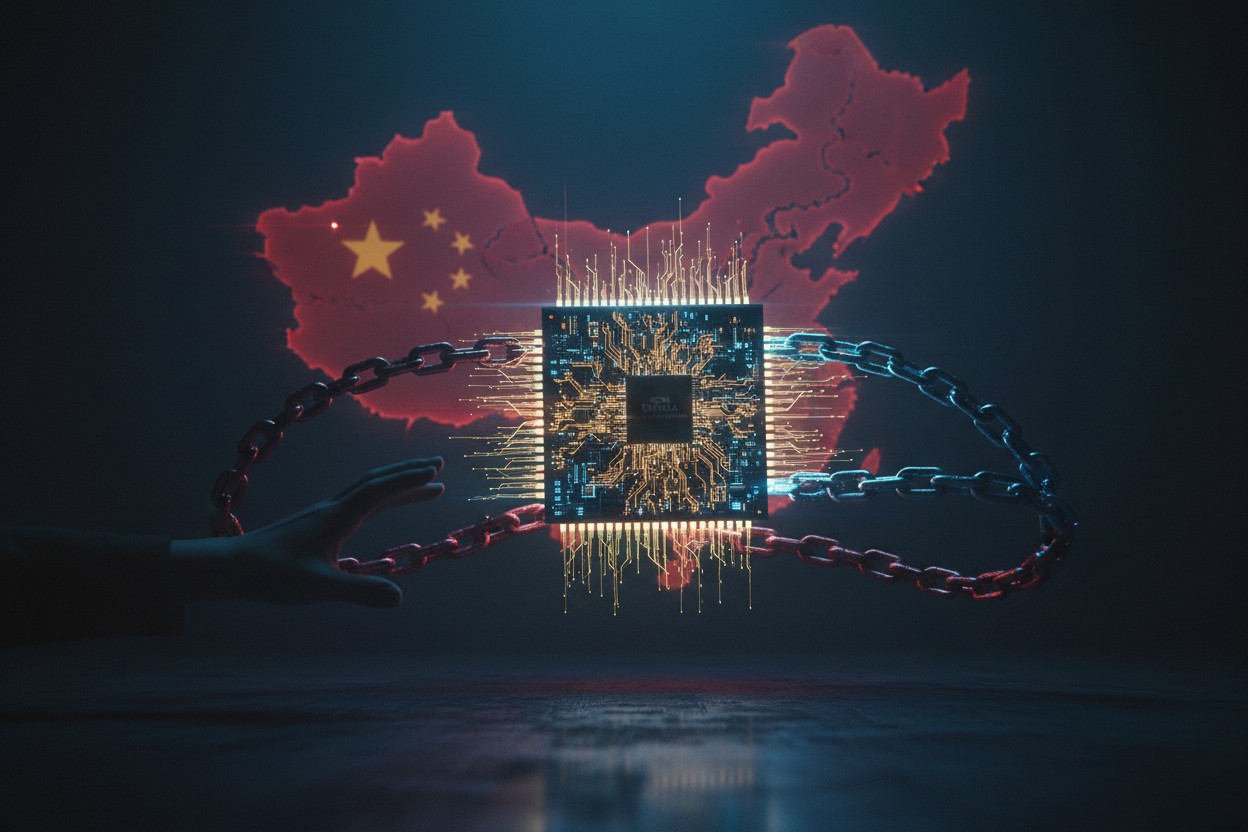
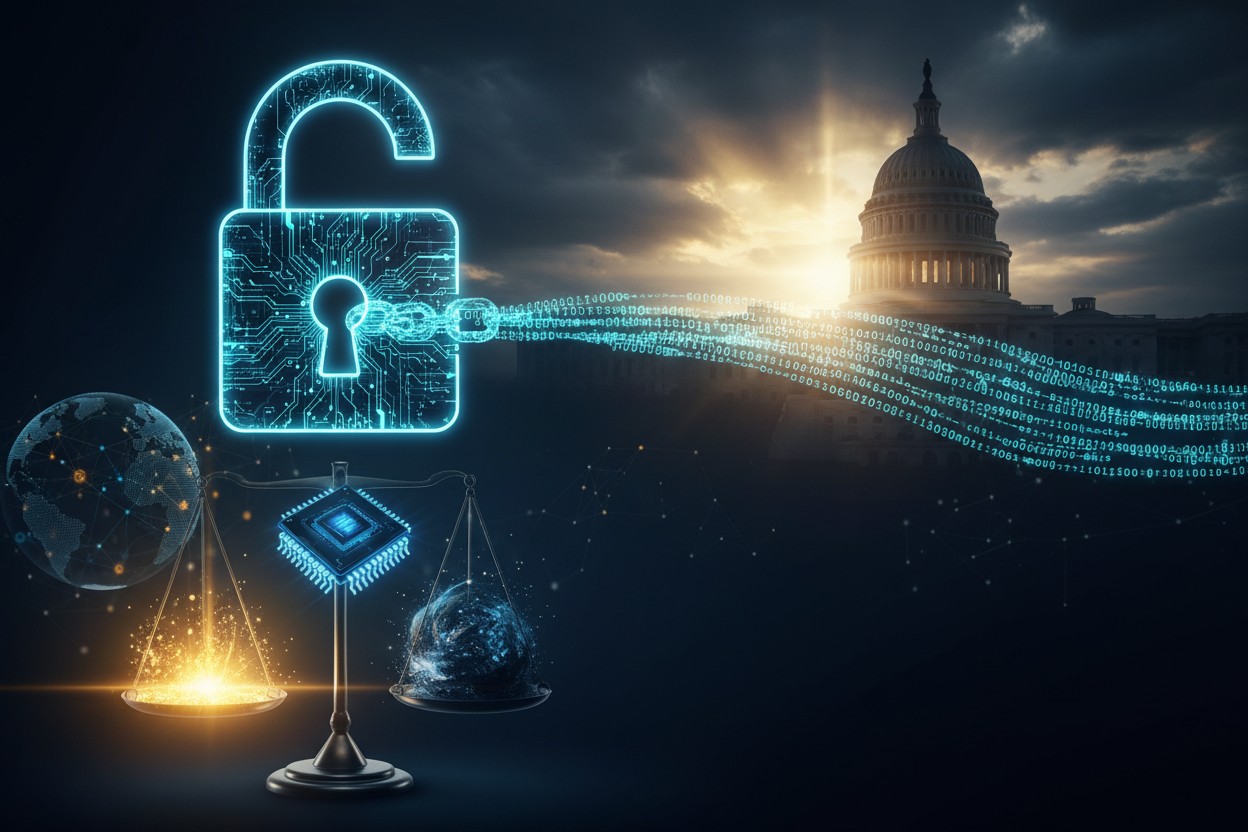
The U.S. Department of Commerce has issued updated guidance restricting Nvidia’s sales of advanced artificial intelligence chips to China, marking the latest escalation in technology export controls between the two countries. The new rules, announced in late May 2026, target Nvidia’s most sophisticated processors, including the Blackwell series, and require export licenses for any transfer to entities headquartered in China or Macau, according to officials [11].
The restrictions expand the definition of controlled semiconductors to include chips that can be used for AI training and supercomputing, citing national security concerns. Commerce Secretary Howard Lutnick has expressed worries that some advanced chip-making equipment may have already reached China, according to Bloomberg [17]. The guidance also closes a loophole that allowed Chinese firms to acquire restricted chips through overseas subsidiaries.
Scope of New Restrictions
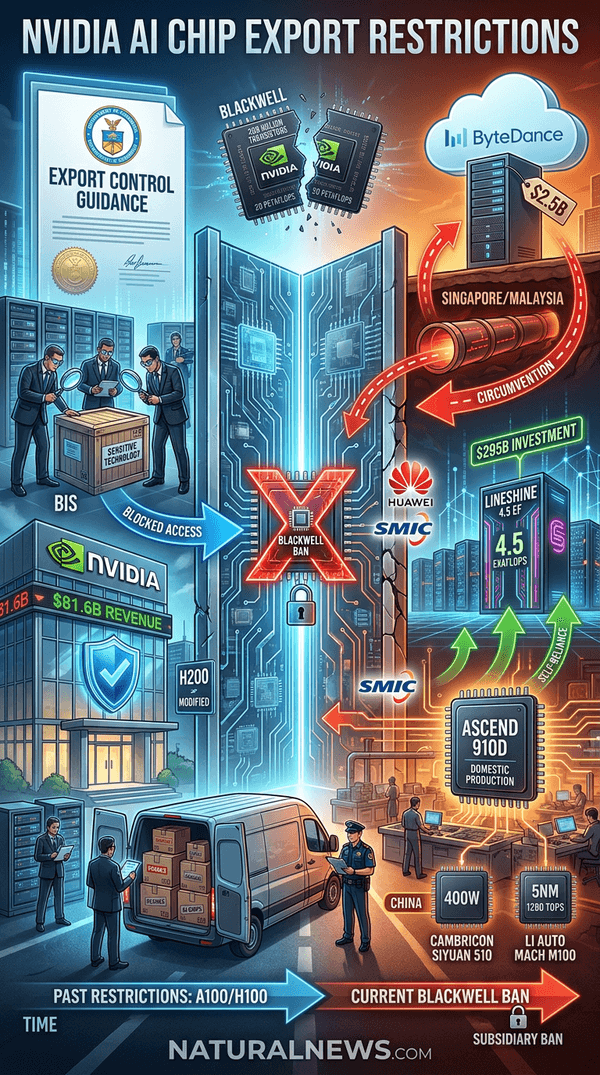
The May 31 guidance from the Commerce Department clarifies that export licenses are required for any entity headquartered in China or Macau, regardless of where their affiliates are located, according to The Epoch Times [11]. This measure is intended to prevent Chinese companies such as Huawei and Semiconductor Manufacturing International Corp. (SMIC) from obtaining advanced Nvidia chips through third-country intermediaries. The rules specifically target Nvidia’s Blackwell processors, which are among the most powerful AI accelerators on the market.
In response to the tightened controls, Chinese firms have accelerated efforts to acquire Nvidia chips through alternative channels. ByteDance, the parent company of TikTok, secured approximately $2.5 billion worth of Nvidia Blackwell servers routed through Singapore and Malaysia, according to a NaturalNews.com report [16]. Meanwhile, U.S. lawmakers have introduced bipartisan legislation such as the Chip Security Act, which aims to mandate firmware-based verification and impose stricter penalties for smuggling [3]. Two Chinese nationals were charged in August 2025 for attempting to smuggle AI chips from Southern California to China, according to court documents [2].
Nvidia’s Response
Nvidia has stated that it complies fully with U.S. export controls and prioritizes national security over commercial opportunities. CEO Jensen Huang told shareholders during the company’s June 24 annual meeting that “national security is first and foremost” and that attempts to build data centers with smuggled chips are a “dead end” because the company provides no support or repairs for such products [15]. Huang also urged server maker Super Micro Computer to enhance its internal compliance controls amid a probe into alleged chip smuggling to China [13].
The company has previously developed modified chips for the Chinese market that comply with export rules, such as the H200, which is the most advanced AI chip legally available to China [5]. However, the new restrictions are expected to affect Nvidia’s revenue. In an earlier filing, Nvidia warned that export controls could result in a revenue impact of up to several billion dollars in the current quarter. The company’s stock fell nearly 2% in January 2025 after the Biden administration first tightened rules, and similar market reactions have been observed following each round of restrictions [4]. Despite these headwinds, Nvidia’s first-quarter revenue for fiscal 2027 rose 85% year-over-year to $81.6 billion, according to BBC News [12].
Impact on China’s AI Sector
The restrictions are accelerating China’s push for semiconductor self-reliance. State media in Beijing has reported that the export controls will spur domestic innovation, and Chinese firms are investing heavily in homegrown alternatives. Huawei is testing its Ascend 910D AI chip, which may outperform Nvidia’s H100 in raw computational power, though it suffers from higher energy consumption and lower efficiency, according to a NaturalNews.com report [1]. Chinese electric vehicle makers are also shifting to proprietary chips, with Li Auto introducing the Mach M100 5-nanometer chip delivering 1,280 trillion operations per second, reducing reliance on Nvidia [N-21].
At the national level, China is planning to spend approximately $295 billion over the next five years to build a nationwide network of interconnected data centers, according to Bloomberg News [8]. The country’s LineShine supercomputer, developed at the National Supercomputing Center in Shenzhen, reclaimed the top spot on the TOP500 list in June 2026, surpassing the U.S.-built El Capitan system [9]. Analysts note that Chinese firms such as Cambricon and Horizon Robotics are emerging as potential alternatives to Nvidia in the domestic AI chip market. Beijing has also restricted overseas travel for top AI specialists, treating them as national-security assets [10].
Outlook
The export controls are expected to remain in place for the foreseeable future, with possible further expansion as the U.S. government continues to monitor China’s acquisition of advanced semiconductors. The Commerce Department indicated that additional measures may be introduced to close any remaining loopholes. Nvidia’s shares experienced a decline following the latest announcement, though specific percentages were not immediately available from the provided sources [11].
The broader U.S.-China technology rivalry shows no signs of abating. President Trump met with Chinese President Xi Jinping in Beijing in May 2026, but no sweeping trade breakthrough was achieved, and the two sides agreed only to launch formal AI safety talks [14]. Meanwhile, Qualcomm has announced plans to design China-specific data center chips that comply with U.S. export curbs, signaling that the market for restricted semiconductors is becoming more fragmented [7]. As both nations pour hundreds of billions of dollars into AI infrastructure, the competition for chip supply will likely intensify, with implications for global technology supply chains.
References
- Cassie B. “China Bets on Huawei’s Ascend Chips to Replace Banned Nvidia Technology.” NaturalNews.com. April 28, 2025.
- Ramon Tomey. “2 Chinese Nationals Charged for Illegally Smuggling AI Chips.” NaturalNews.com. August 9, 2025.
- Willow Tohi. “Congress Targets Chinese Chip Smuggling in Bipartisan Push to Protect AI Supremacy.” NaturalNews.com. May 18, 2025.
- Zoey Sky. “Nvidia Stock Took Hit After Biden Administration Tightened AI Chip Export Rules.” NaturalNews.com. January 29, 2025.
- Kevin Hughes. “TikTok Parent ByteDance Goes All In with $14B Nvidia Chip SPLURGE.” NaturalNews.com. January 2, 2026.
- Trends-Journal-2023-12-48.
- “Qualcomm To Design China-Specific Data Center Chip In Compliance With US Export Curbs.” ZeroHedge. June 25, 2026.
- “China Bets $295 Billion on Homegrown AI Infrastructure to Close Gap with United States.” NaturalNews.com. June 10, 2026.
- “China Reclaims World’s Fastest Supercomputer Ranking With LineShine System.” yournews.com. June 23, 2026.
- Edison Reed. “China Restricts Overseas Travel for AI Specialists, Report Reveals.” NaturalNews.com. May 28, 2026.
- Evgenia Filiaminova. “US Moves To Further Restrict China’s Access To Advanced AI Chips.” ZeroHedge (via The Epoch Times). June 1, 2026.
- “Nvidia’s latest record result fails to impress investors.” BBC News. May 21, 2026.
- “Nvidia CEO Urges Super Micro To ‘Enhance Compliance’ Amid AI Chip-Smuggling Probe.” ZeroHedge. May 23, 2026.
- Tom Ozimek. “Bessent Says US, China To Launch AI Safety Talks After Trump-Xi Meeting In Beijing.” ZeroHedge (via The Epoch Times). May 14, 2026.
- “NVIDIA CEO Says Using Smuggled AI Chips for Data Centers Is a ‘Dead End’.” NTD. June 26, 2026.
- Patrick Lewis. “ByteDance secures $2.5 billion in Nvidia AI chips amid U.S.-China tech tensions.” NaturalNews.com. March 30, 2026.
- “The US says ASML’s top chip tool may be in China. ASML says it isn’t.” TechCrunch. June 19, 2026.
Explainer Infographic
Submit a correction >>
Tagged Under:
Big Tech, China, communist China, computing, conspiracy, cybersecurity, cyberwar, Dangerous, economy, EVs, future tech, Glitch, globalism, headlights, information tech, information technology, national security, NVIDIA, proprietary chips, tech giants, technocrat, threat, trade wars
This article may contain statements that reflect the opinion of the author
RECENT NEWS & ARTICLES