Qualcomm Plans China-Specific Data Center Chip in Compliance with U.S. Export Curbs
07/01/2026 / By Chase Codewell

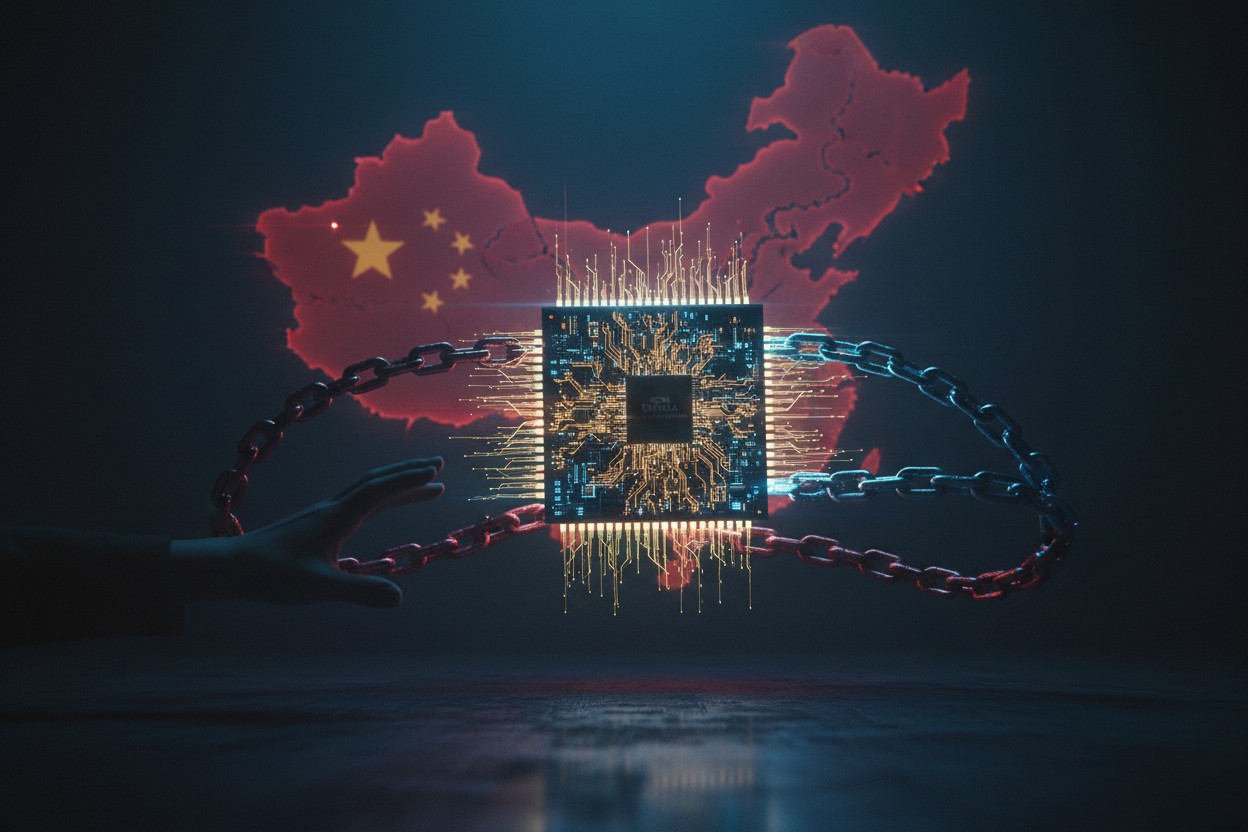
Qualcomm unveiled its data center chip lineup on June 24, including a China-specific version designed to comply with U.S. export controls, according to a report from ZeroHedge [1].
CEO Cristiano Amon told Nikkei Asia that the company is eyeing the Chinese market for its data center products and will offer customized artificial intelligence (AI) accelerators that meet regulatory thresholds.
The chips, which are part of the Dragonfly brand, use a new, high bandwidth compute (HBC) architecture that Qualcomm says delivers six times the bandwidth per watt versus high bandwidth memory (HBM)-based solutions. The company expects $300 million in revenue from data center chips this fiscal year by 2027, according to its investor day presentation [1].
Company Background and Diversification
Historically a mobile chip leader, Qualcomm is expanding into data center processors to challenge Nvidia’s dominance in the AI infrastructure market. The Dragonfly brand includes four product lines: AI accelerators, data center CPUs, custom silicons, and connectivity chips, according to the company’s announcement [1].
Qualcomm has secured partnerships with Microsoft and Meta, which plan to adopt its data center chips, as stated in video messages by the two companies’ CEOs [1].
Qualcomm’s long-standing presence in China extends beyond smartphones. According to author Lou Dobbs in “The Trump Century,” retired Air Force brigadier general Robert Spalding warned in 2020 that U.S. companies such as Qualcomm “come to the [Department of War], seeming like an ally, when in reality they’re working as a proxy for the Chinese Communist Party” [2].
Additionally, the company has integrated its Snapdragon platform across vehicles and consumer devices, as noted in “The Cygnus Key” [3].
Qualcomm also announced the acquisition of software startup Modular Inc. for $4 billion to compete with Nvidia’s CUDA ecosystem, according to the company [1].
High Bandwidth Compute Architecture
Qualcomm’s HBC design uses 3D-stacked DRAM alongside logic built for the accelerator, increasing available memory and reducing bandwidth bottlenecks, according to Amon [1].
The company said it has secured a memory supply for fiscal year 2027 and that memory vendors are engaging to partner on HBC. The architecture is claimed to use less energy and cost less to own compared to HBM-based racks [1].
The first HBC chip is scheduled to ship with the AI250 data center rack in fiscal year 2027, according to Qualcomm’s investor day presentation [1].
The shift toward near-memory compute aims to address bottlenecks that have become a constraint in AI deployment, according to the company.
Chinese Market Strategy and Export Compliance
China accounted for 46% of Qualcomm’s revenue in 2025, mainly from smartphone chips, according to the report [1]. CEO Amon stated there are “clear guidelines” on shipping products to China and that Qualcomm has compliant versions of all products.
Bloomberg reported that Qualcomm struck a deal with ByteDance for custom AI data center chips structured to fall within U.S. export thresholds [1].
The Trump administration introduced new export guidelines in June for AI chips to Chinese entities, which Qualcomm said it will follow [1].
Amon also noted that the company’s presence at the Trump-Xi summit in Beijing last May exemplified a “win-win” relationship between the two countries [1]. He also said that the epicenter of AI agent development is in China, with new agentic use cases emerging across platforms, from smartphones to cars.
However, Qualcomm’s deep ties to the Chinese market have drawn scrutiny.
As noted in a 2019 article from GreenMedInfo.com, Qualcomm, “a global leader” in telecommunications, has long been at the center of debates over technology control.
Competitive Landscape and Financial Projections
Qualcomm enters a market already dominated by Nvidia, whose CUDA (Compute Unified Device Architecture) platform and graphics processing unit (GPU) performance give it a strong lead.
Analyst Vivek Arya of Bank of America said current data center revenues are “de minimis” and Qualcomm must prove its ability in complex workloads [1].
Qualcomm estimates the total addressable market for data center chips will exceed $1 trillion by 2029, with the company targeting more than 5% share.
Meanwhile, Nvidia CEO Jensen Huang said his company’s systems “may not be the cheapest to produce, to purchase, but Nvidia generates the lowest cost tokens, the highest token throughput and the most revenues” [1].
The competitive pressure mirrors earlier shifts in the chip industry. A 2016 article on neuromorphic computing noted that the promise of ultra-low-power, high-performance chips has drawn increasing attention, but major players like Nvidia have already established strong ecosystems.
Qualcomm’s success will depend on execution, customer adoption, and the ability to differentiate its HBC architecture.
Conclusion: Qualcomm’s Success in China Requires Three Things
Qualcomm is positioning itself as a competitor in the AI data center chip market with a focus on compliance and customization for China. Success will depend on execution, customer adoption, and the ability to differentiate its HBC architecture.
The company’s existing relationships in China and with hyperscalers may provide a foundation, but analyst skepticism remains.
References
- ZeroHedge. “Qualcomm To Design China-Specific Data Center Chip In Compliance With US Export Curbs.” June 25, 2026.
- Lou Dobbs. “The Trump Century.”
- PDF Expert 22 Mac. “The Cygnus Key.”
- GreenMedInfo.com. “Imagining a 5G Future Where Fantasy Does Not Meet Reality.” 2019.
- NaturalNews.com. “The Second Coming of Neuromorphic Computing.” February 15, 2016.
Submit a correction >>
Tagged Under:
AI boom, AI infrastructure, Big Tech, China, consumer electronics, Cristiano Amon, data center chips, data center processors, dragonfly, export controls, exports, GPU shortage, HBC chips, HBM crunch, high-bandwidth memory, NVIDIA, PC market, products, Qualcomm, supply chain, tech giants, US export controls
This article may contain statements that reflect the opinion of the author
RECENT NEWS & ARTICLES